Monday, January 26, 2015

Native Black Americans: War and Peace in the Carolinas

 -

The greatest myth about the Black Native Americans is that they never existed. This myth has been perpetuated by numerous American films which record the Indian Wars with the Apache and Lakota tribes.

But the Black Native Americans had many wars first with the Spanish, and later the British colonists. These Black Native Americans lived on the Atlantic seaboard from New York, all the way down into Florida.


These Black Native Americans fought bravely for their lands. Some were sold into slavery into the Caribbean while, others were made slaves or identified as "negro freemen" in the South.

Black Native Americans have a history of fighting Europeans for their independence. Or they lost their lives fighting with the French during the French Indian War.


This was especially true in North Carolina. In North Carolina there were many Black Native Americans including the Yuchi Creek,Tuscarora and Yamasse. A large mnumber of Algonquian speaking tribes were Black Native America.

 -

These Black Native Americans were made into slaves by the colonists. Some of them were even sold into slavery in the Caribbean. There were some Black Cherokee, but for the most part the Cherokee migrated into territory originally occupied by the Black Native American Creek, Yuchi, Tuscarora and Yamassee tribes.

 -

At first the Europeans identified the Black Native Americans as Indians, but overtime because the Carolina Indians were predominately Negroes or Blacks, both African and Black Native American slaves were called Negroes especially after the Yamasse War.


The Black Native Americans for the most part were peaceful people. They hunted and fished or grew crops to support themselves. The British from Barbadoes upon settling the Carolinas began to enslave the Black Native Americans to take their land and force them to work their plantations.


 -

Below is a scene of captives held by Tuscarora Indians by Baron Christoph Von Graffenried, as you can see their were different ethnicities in the drawing including Black Native Americans, and a Black European captive.


 -

Below are Secotan from an Algonquian speaking Indian Village in North Carolina , by John White 1585. Many Algonquian speakers were Native Black Americans.

 -

As you can see there were many Black Native American tribes in the South. Instead of telling the truth,historians claim that the only Blacks in the south were runaway slaves. This lie has been useful, for the mongoloid Indians to steal our heritage and deny that Black Native Americans ever existened.

Sunday, January 25, 2015

Archaeological Evidence of Black Native American Mound Builders

Some researchers reject the idea that Malians came to America in 1310. They base this conclusion on the myth that the first Africans came to the Americas as slaves.

The art from the American mound builders and Brazil indicate the presence of Malian military personal. Richard Hull, in Munyakaye: African Civilization before the Bature, noted that "the Mali marines wore white caps on their heds and a white tunic. On the side of the skull-caps worn by the Malian marines".E. Murphy, History of African Civilization, said the uniform of the Malian military consisted of sandles, loose fitting cotton breeches reaching down to the knees, a sleeveless tunic, and a white headdress of either cotton or leather, decorated with one or more feathers"(p.138). Below is the Brazil Tablet

 -

As you can see the Malian royal from Brazil wears the sleeveless tunic, skullcap breeches reaching down to the knees,as described by Europeans who visited the Mali Empire.

.

Below is a statuette from the Spiro mound.

 -

.

This figure also wears a skullcap and breeches. He also has a shield on his back. This is interesting because Malian marines usually were armed with a leather shield and short sword. This spiro mound figure may be a representation of a Malian marine.


Below are some short swords and other figures with knee-length breeches, found in the Spiro mounds.

 -


.

.
 -

.

These artifacts show the influence of Malian explorers in building mounds in North and South America.

.

Tuesday, January 13, 2015

Chinese Domesticated Donkeys' Nubian Origin


Han et al. (2014). Ancient DNA provides new insight into the maternal lineages and domestication of Chinese donkeys BMC Evolutionary Biology 2014, 14:246 http://www.biomedcentral.com/1471-2148/14/246

Han et al (2014) in a study of Chinese donkeys found that the Chinese donkeys are descendant from the Nubian wild ass (Equus africanus africanus) . They believe these donkeys were in China before the Han empire.

The researchers noted that the: “ First, Chinese historical records state that 4000 years ago, the donkey was a treasure that was rare and only found in the aristocratic and imperial palaces”. This is an interesting finding because I have shown elsewhere that the Kushites from Nubia: Mande and Dravidian speakers founded the first civilizations of China: Xia and Shang respectively. This finding offers further support to the Kushite origin of the Xia and Shang.
You can find out more about the Blacks of Xia and Shang in my book:

Sunday, January 11, 2015

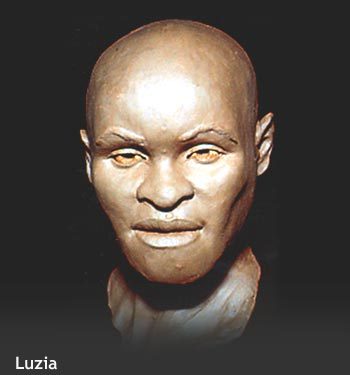
The first Americans Naia, and Luzia dating to 12,000 BC were Negroes


NAIA of Mexico


LUZIA of Brazil

Archaeologist have reconstructed the faces of ancient Americans from Brazil and Mexico. These faces are based on the skeletal remains dating back to 12,000BC.

Researchers working on these ancient people note that they resemble Negroes, instead of contemporary Native Americans.


In the  Smithsonian Magazine Dr. Chatters who found Naia's skeleton, noted that: 

“The small number of early American specimens discovered so far have smaller and shorter faces and longer and narrower skulls than later Native Americans, more closely resembling the modern people of Africa, Australia, and the South Pacific. "This has led to speculation that perhaps the first Americans and Native Americans came from different homelands," Chatters continues, "or migrated from Asia at different stages in their evolution."

Read more: http://www.smithsonianmag.com/science-nature/dna-12000-year-old-skeleton-helps-answer-question-who-were-first-americans-180951469/#hexUIhxcwDxMkCAz.99


Although Dr. Chatters believes these Negroes came from Asia this seems unlikely. It is unlikely because the Ice Age would have made it impossible to sail from Asia to Mexico and Brazil at this time. These Negroes were probably Blacks from Africa. This is the most likely origin of these Blacks;  the Dafuna boat dating back to 18,000 BC, shows that Africans had boats at this early date.

The Khoisan Probably took haplogroups N and y-chromosome R to Eurasia during the Aurignacian period


.

I discuss the origin  Europeans genes  in my recent paper: " Were the First Europeans Pale or Dark Skinned? http://www.scirp.org/journal/aahttp://dx.doi.org/10.4236/aa.2014.43016


I quote"
The traditional view for the spread of L3(M, N) across Eurasia is that the M and N macrohaplogroups originated in western Eurasia and returned to Africa as a result of back-migration. The big problem for this theory is that the proposed dates for the origin of haplogroups N and M in western Europe, date to a period when these areas were inhabited by Neanderthal people—not AMH. This supports an African origin for L3(M, N).


The craniometric evidence supports a Khoisan presence in Europe during Aurignacian times. If the Khoisan represent the ancient dark skinned European population, this reality should be able to be confirmed by genetic research.


The most archaic AMH remains come from Florished, South Africa; they date between 190 - 330 kya (Rito et al., 2013). Other ancient fossil evidence of AMH in South Africa come from Broken Hill (c. 110 kya) and the Klasis River caves (c. 65 - 105 kya). Researchers have been surprised to find Khoisan and European admixture. The idea that the Khoisan acquired Eurasian admixture via Ethiosemitic speakers is pure speculation (Pickrell et al., 2013). There is no archaeological
evidence of Ethiopians migrating into East and South Africa, but there is evidence of an ancient migration of Khoisan into Europe based on archaeological and skeletal data.


The Khoisan carry haplogroups L3(M, N). Before they reached Iberia, they probably stopped in West Africa. The basal L3(M) motiff in West Africa is characterized by the Ddel site np 10,394 and Alul site np 10,397 associated with AF-24. This supports my contention that Khoisan speakers early settled West Africa on their way to Iberia.


Granted L3 and L2 are not as old as LOd, but Gonder et al. (2006) provides very early dates for this mtDNA e.g., L3(M, N) 94.3; the South African Khoisan (SAK) carry L1c, L1, L2, L3 M, N dates to 142.3 kya; the Hadza are L2a, L2, L3, M, N, dates to 96.7 kya.


The dates for L1, L2, L3, M, N are old enough for the Khoisan to have taken N to West Africa, where we find L3, L2 and LOd and thence to Iberia as I suggested in my paper (Winters, 2011). It is interesting to note that LO haplogroups are primarily found among Khoisan and West Africans. This shows that at some point in prehistory the Khoisan had migrated into West Africa.


The first modern European reconstructed by Forensic artist Richard Neave based on skull fragments from 35,000 years ago resembled a Khoisan (Figure 1). The skull was discovered in the southwest region of Romania’s Carpathian Mountains. This supports the research of Boule and Vallois that South Africans migrated into Europe 35 kya. This genetic evidence now supports Boule and Vallois of a Khoisan migration into Europe.


The Khoisan may have introduced the L haplogroup to Iberia. The SAK populations carry haplogroups L2, and L3. de Domínguez (2005), noted that much of the ancient mtDNA found in Iberia has no relationship to the people presently living in Iberia today and correspond to African mtDNA haplogroups. de Domínguez (2005) found that the lineages recovered from ancient Iberian skeletons are the African lineages L1b, L2 and L3."


References:


Balter, M. (2005). Ancient DNA Yields Clues to the Puzzle of European Origins. Science, 310, 964-965. http://dx.doi.org/10.1126/science.310.5750.964


Barral, L., & Charles, R. P. (1963). Nouvelles donnees anthropometriques et precision sue les affinities systematiques des negroides de Grimaldi. Bulletin du Musee d’Anthropologie Prehistorique de Monaco, 10, 123-139.

Boule, M., & Vallois, H. V. (1957). Fossil Man. New York: Dryden Press.

Brace, C. L., Seguchi, N., Quintyn, C. B., Fox, S. C., Nelson, A. R., Manolis, S. K., & Pan, Q. F. (2006). The Questionable Contribution of the Neolithic and the Bronze Age to European Craniofacial Form. Proceedings of the National Academy of Sciences of the United States of America, 103, 242-247. http://dx.doi.org/10.1073/pnas.0509801102


Brown, S. J. (2006). Neanderthals and Modern Humans in Western Asia. http://karmak.org/archive/2003/01/westasia.html


Canfield, V. A., Berg, A., Peckins, S. et al. (2014). Molecular Phylogeography of a Human Autosomal Skin Color Locus under Natural Selection. G3, 3, 2059-2067. http://dx.doi.org/10.1534/g3.113.007484


Caramelli, D., Lalueza-Fox, C., Vernesi, C., Lari, M., Casoli, A., Mallegni, B. C., Dupanloup, I., Bertranpetit, J., Barbujani, G., & Bertorelle, G. (2003). Evidence for a Genetic Discontinuity between Neandertals and 24,000 Year-Old Anatomically Modern Europeans. Proceedings of the National Academy of Sciences of the United States of America, 100, 6593-6597. http://dx.doi.org/10.1073/pnas.1130343100


Caramelli, D., Milani, L., Vai, S., Modi, A., Pecchioli, E. et al. (2008). A 28,000 Years Old Cro-Magnon mtDNA Sequence Differs from All Potentially Contaminating Modern Sequences. PLoS ONE, 3, e2700. http://dx.doi.org/10.1371/journal.pone.0002700

Clark, J. D. (1977). The Origins of Domestication in Ethiopia. 5th Panafrican Congress of Prehistory and Quaternary Studies, Nairobi.

de Domínguez, E. F. (2005). Polimorfismos de DNA mitocondrial en poblaciones antiguas de la cuenca mediterránea. PhD Thesis, Barcelona: Universitat de Barcelona, Departament Biologia Animal.

Diop, A. (1974). The African Origin of Civilization. Brooklyn, NY: Lawrence Hill Books.

Diop, A. (1991). Civilization or Barbarism. Brooklyn, NY: Lawrence Hill Books.

DuBois, W. E. B. (1941). The World and Africa.

Ehret, C. (1979). On the Antiquity of Agriculture in Ethiopia. Journal of African History, 20, 161-177.
http://dx.doi.org/10.1017/S002185370001700X


Gilead, I. (2005). The Upper Paleolithic Period in the Levant. Journal of World Prehistory, 5, 105-154.

Gonder, M. K., Mortensen, H. M., Reed, F. A., de Sousa, A., & Tishkoff, S. A. (2006). Whole mtDNA Genome Sequence Analysis of Ancient African Lineages. Molecular Biology and Evolution, 24, 757-768. http://dx.doi.org/10.1093/molbev/msl209

 González, A. M., Cabrera, V. M., Larruga, J. M., Tounkara, A., Noumsi, G., Thomas, B. N., & Moulds, J. M. (2006). Mitochondrial DNA Variation in Mauritania and Mali and Their Genetic Relationship to Other Western Africa Populations. Annals of Human Genetics, 70, 631-657. http://www.blackwell-synergy.com/doi/abs/10.1111/j.1469-1809.2006.00259.x?cookieSet=1&journalCode=ahg
Haak, W., Forster, P., Bramanti, B., Matsumura, S., Brandt, G., Tänzer, M., Villems, R., Renfrew, C., Gronenborn, D., Alt, K. W., & Burger, J. (2005). Ancient DNA from the First European Farmers 7500-Year-Old Neolithic Sites. Science, 310, 1016-1018.

Holliday, T. (2000). Evolution at the Crossroads: Modern Human Emergence in Western Asia. American Anthropologist, 102, 54-68.

Ki-Zerbo, J. (1981). Unesco General History of Africa Vol. 1: Methodology and African Prehistory. 572.

Klyosov, A. A. (2014). Reconsideration of the “Out of Africa” Concept as Not Having Enough Proof. Advances in Anthropology, 4, 18-37. http://www.scirp.org/journal/aahttp://dx.doi.org/10.4236/aa.2014.41004

Lazaridis, J., Patterson, N., Mittnik, A. et al. (2013). Ancient Human Genomes Suggest Three Ancestral Populations for  Present-Day Europeans. http://biorxiv.org/content/biorxiv/early/2013/12/23/001552.full.pd

Olalde, I., Allentoft, M. E., Sanchez-Quinto, F., Santpere, G., Chiang, C. W. K., DeGiorgio, M. et al. (2014). Derived Immune and Ancestral Pigmentation Alleles in a 7,000-Year-Old Mesolithic European. Nature, 507, 225-228. http://dx.doi.org/10.1038/nature12960

 Pickrell, J. K., Patterson, N., Loh, P. R., Lipson, M., Berger, B., Stoneking, M., Pakendorf, B., & Reich, D. (2013). Ancient West Eurasian Ancestry in Southern and Eastern Africa. http://arxiv.org/abs/1307.8014

 Prufer, K., Racimo, F., Patterson, N., Jay, F., Sankararaman, S., Sawyer, S. et al. (2014). The Complete Genome Sequences of Neanderthal from the Altai, Mountains. Nature, 505, 43-49.

Quibtanana-Murci, L., Semino, O., Bandelt, H. J., Passaro, G., McElreadey, K., & Santachiara-Benerecetti, A. S. (1999). Genetic Evidence of an Early Exit of Homo Sapiens from Africa through Eastern Africa. Nature Genetics, 23, 437-441. http://dx.doi.org/10.1038/70550


Rito, T., Richard, M. B., Fernandes, V., Alshamal, F., Cerny, V., Pereira, L., & Soares, P. (2013). The First Modern Human Dispersals aross Africa. PLoS ONE, 8, e80031.

Scozzari, R., Massaia, A., Trombatta, B., Bellusci, G., Myres, N. M., Novelletto, A., & Cruciani, F. (2014). An Unbiased Resource of Novel SNP Markers Provides a New Chronology for Human Y-Chromosome and Reveals a Deep Phylogenetic Structure in Africa. Genome Research.

Skoglund, P., Malmström, H., Omrak, A., Raghavan, M., Valdiosera, C., Günther, T., Hall, P., Tambets, K., Parik, J.,Sjögren, K. G., Apel, J., Willerslev, E., Storå, J., Götherström, A., & Jakobsson, M. (2014). Genomic Diversity and Admixture Differs for Stone-Age Scandinavian Foragers and Farmers. Science, 344, 747-750. http://dx.doi.org/10.1126/science.1253448


Stevanovitch, A., Gilles, A., Bouzaid, E., Kefi, R., Paris, F., Gayraud, R. P., Spadoni, J. L., El-Chenawi, F., & Béraud-Colomb, E. (2003). Mitochondrial DNA Sequence Diversity in a Sedentary Population from Egypt. Annals of Human Genetics, 68, 23-29. http://dx.doi.org/10.1046/j.1529-8817.2003.00057.x

Steven, L. K., Stiner, M. C., Reese, D. S., & Gulec, E. (2001). Ornaments of the Earliest Upper Paleolithic: New Insights

from the Levant. Proceedings of the National Academy of Sciences of the United States of America, 98, 7641-7646. http://dx.doi.org/10.1073/pnas.121590798
Wendorf, F. (1968). The History of Nubia. Dallas, TX.

Winters, C. (2008). Aurignacian Culture: Evidence of Western Exit for Anatomically Modern Humans. South Asian Anthropologist, 8, 79-81.

Winters, C. (2010). Origin and Spread of the Haplogroup N. Bioresearch Bulletin, 3, 116-122.

Winters, C. (2011). The Gibraltar out of Africa Exit for Anatomically Modern Humans. WebmedCentral BIOLOGY, 2, ArticleID: WMC002311. http://www.webmedcentral.com/article_view/2311


Monday, December 29, 2014

New Book: History of Blacks in America from Pre-History to 1877


I have just published a new book on the history of Afro-Americans. This is an important book because it is the first book which details the entire history of Afro-Americans. Although, the average history of Afro-Americans only discusses the African slaves, in this book I tell the history of the indigenous Black Native Americans and Black Europeans who also contributed to the contemporary  Afro-American population.

The final chapter of this book provides the genetic evidence of the relationship between Native Americans and Sub-Saharan Africans.

History of Blacks in America from Pre-History to 1877

List Price: $25.99 

History of Blacks in America from Pre-History to 1877
 

A Common Core State Standards History

Authored by Dr. Clyde WintersIn History of Blacks in America from Pre-History to 1877, I discuss the real history of Blacks in America. It explains that the contemporary Black population in the United States is made up of three Black Nationalities: Black Europeans, Black Native Americans and Black Africans from Sub-Saharan Africa.
A History of Blacks in America from Pre-History to 1877 is meant to be used as a textbook or a single history text. The book is divided into two parts. Part One provides a traditional short history of Afro-Americans from slavery up to the 1960's.
Part Two provides two short essays on the Black Europeans and American Mound builders, along with short informational text teachers can use to teach the history of the Black Americans of European descent, Black Americans of African descent and Black Americans of Native American descent so the reader can have a full knowledge of the history of Blacks in America.


Publication Date:
Dec 28 2014
ISBN/EAN13:
1505827612 / 9781505827613
Page Count:
160
Binding Type:
US Trade Paper
Trim Size:
8.5" x 11"
Language:
English
Color:
Full Color
Related Categories:
History / United States / General

Friday, December 26, 2014

The Decipherment of the Fuente Magna Bowl is Correct


 Claims that my translation of the Fuente Magna Bowl at http://reocities.com/tokyo/bay/7051/Awen3a.htm is false because I claimed that the original name for the Sumerian god: Nammu was Ni-ash ( "unique awe") or Nia. Below is my decipherment

_____________________________________________________________________________
Decipherment of the Cuneiform Writing on the
Fuente Bowl
By
Clyde A. Winters
Below is a decipherment of the cuneiform writing on the Fuente Bowl

Cuneiform Writing on the Fuente Bowl
To translate the cuneiform I used Samuel A. B. Mercer's, Assyrian grammar with chrestomuthy and glossary (N.Y.:AMS Press,1966) to compare the signs found on the Fuente bowl with the cuneiform syllabary. To read the Sumerian text I used John L. Hayes, A Manuel of Sumerian: Grammar and text ( Malibu,CA:Udena Publications, 2000) and John A Halloran, Sumerian Lexicon, http://www.sumerian.org/sumerlex.htm .
I will translate the Sumerian cuneiform in panels 1 and 2 of the   cuneiform text reading from right to left.

In the first panel there is no mention of Shamash the sun god. This is the Akkadian word for the sun god, the name of the sun god in Sumerian was Utu. Reading the text from right to left top to bottom we find the following;
Figure 1: Panel 1
Ti Kur kur kur kur (determinative for divine names) Nia (lit. ni-ash) (Figure 1)
Translation:
"Approach in the future (one) endowed with great protection the great Nia".
"This favorable oracle of the people to establish purity and to establish character [for all who seek it]".
This first panel is very interesting. There are three Proto-Sumerian signs in this panel. Here we also find the use of the divine determinative. Hayes, page 35 (figure 5a) discusses this sign.
The Sumerian sign used before divine names
I have interpreted the sign Ni-ash as Nia, because of the fact that when a syllable is joined to a consonant vowel form the adjoining sign becomes a single vowel. If we read the signs as Ni-ash it means: "unique awe".
The Sumerian goddess was Nammu, we know very little about this goddess because much of the knowledge about her was lost at the beginning of Ur111. According to Hayes she was recognized as "the mother who gave birth to heaven and earth", the primeval mother, who gave birth to the gods" (Hayes, p.35). This passage suggests that the original name for Nammu was Nia. The quote from Hayes makes it clear that Nammu-Nia was highly regarded and was worshipped as the main god before the rise of any other Sumerian gods.

In the second panel reading from right to left, top to the bottom we find the following:
Figure 2: Panel 2
Transliteration Panel 2:
Pa en ash sa tur
Translation:
"Sprout [oh] diviner the unique advise [at] the temple"

This translation of the first two panels of the cuneiform writing reads as follows:
"Approach in the future (one) endowed with great protection the Great Nia".
"[The Divine One Nia(sh) to] Establish Purity, Establish Gladness, Establish Character"
"[Use this talisman (the Fuente bowl)] To sprout [oh] diviner the unique advise [at] the temple".

Here we have panel 3, of the Fuente bowl. The signs on this panel are very interesting, as in the other panels we see a combination of Proto-Sumerian and cuneiform signs.

Panel 3
Reading from right to left, top to bottom. We have the following:
Zi esh
The righteous shrine
Esh esh esh esh
Anoint the shrine, anoint the shrine
Pap pa ge
The leader takes an oath [to]
Lu ta mi du lu ta
Establish Purity , a favorable oracle (and) Establish character
Bar nu ash
Open up a unique light [i.e., knowledge, for all]
Ash ti en
Wish for a noble life
The entire panel reads as follows:
"The righteous shrine, anoint (this) shrine, anoint (this) shrine; The leader takes an oath [to] Establish purity, a favorable oracle (and to) Establish character. [Oh leader of the cult] Open up a unique light [for all], [who] wish for a noble life".
Commentary
The cuneiform writing was interesting for two reasons. First, we find that these panels have proto-Sumerian symbols mixed with the cuneiform symbols. Secondly, whereas, the wedges of most Sumerian cuneiform text point leftward, the wedges of the Fuente cuneiform signs point rightward. This may result from the fact that in the Fuente text , the letters are read from right to left,
instead of left to right like the cuneiform text from Mesopotamia.

The passage on the cuneiform panels of the Fuente Bowl seems to be very similar to the Proto-Sumerian inscription on the right side of the bowl. This translation makes it clear that the passage complements my earlier decipherment of the Proto-Sumerian text also found on the left side of the
 Fuente Bowl.
_____________________________________________________________________________

As you can see from this decipherment I cite where I got the translation of Sumerian terms and explain in detail  my decipherment. The authors of the Wiki:  at  http://www.palaeoseti.de/doku.php/suedamerika/fuente_magna , provide no Sumerian to dispute my translation of the Fuente bowl. This Wiki is a good example of how authors will use any means to deny the linguistic truth, that people from the ancient world were in the Americas before Columbus. You can not say a decipherment is wrong unless you provide specific linguistic evidence to dispute my claims since we have considerable knowledge about the Sumerians and their language.